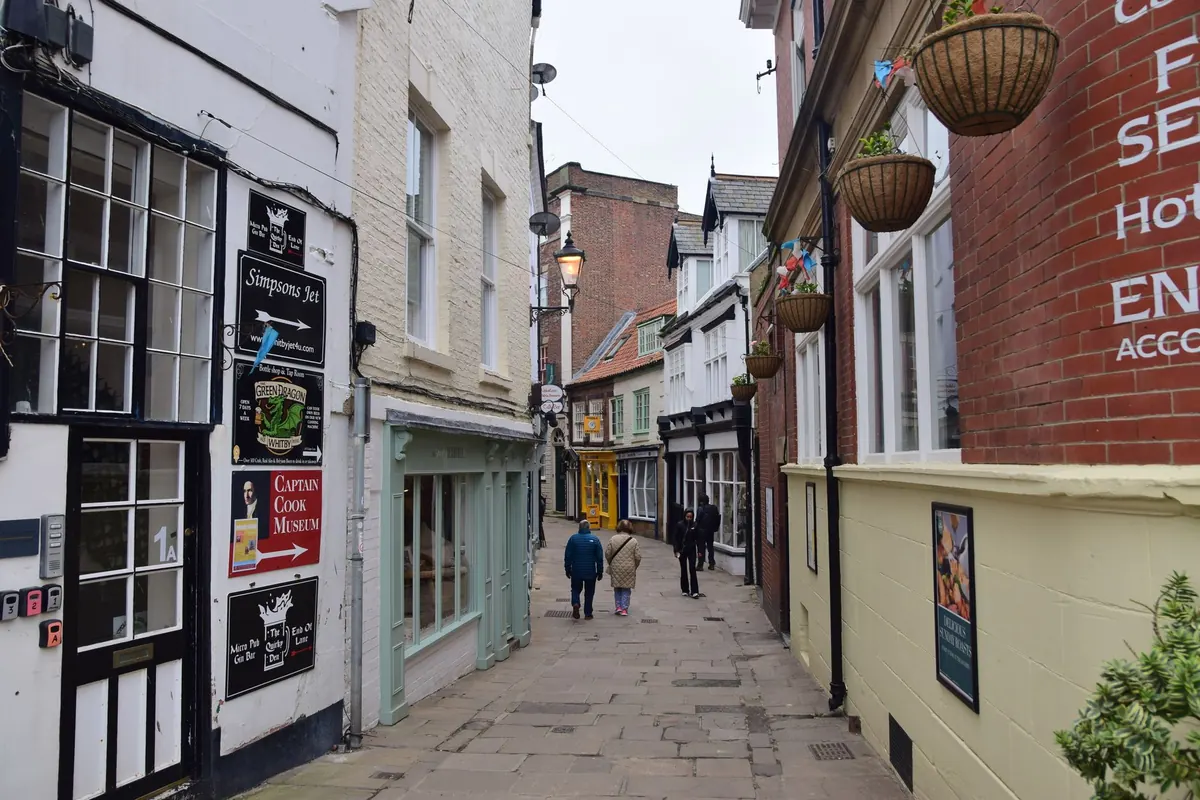
You can watch it happen on any high street. Someone stops, points at a stretch of worn grey stone and calls it cobbles. A nearby contractor winces.
Nothing wrong with the word itself. Cobble is a perfectly good English term — it just means something narrower than most people assume. When you are describing a repair, ordering stone, or disagreeing politely with a conservation officer, that narrowness is the whole point. What follows is the vocabulary, roughly in the order you will meet it.
Cobbles and setts: not the same thing
A cobble is a rounded stone. Traditionally it was lifted from a riverbed or a beach, worn smooth by water, small enough to sit in one hand — often somewhere between 75mm and 150mm across — and rounded on every face. That roundness is the defining feature. It is also why genuine cobbled streets are lumpy underfoot, noisy, and slow to drain.
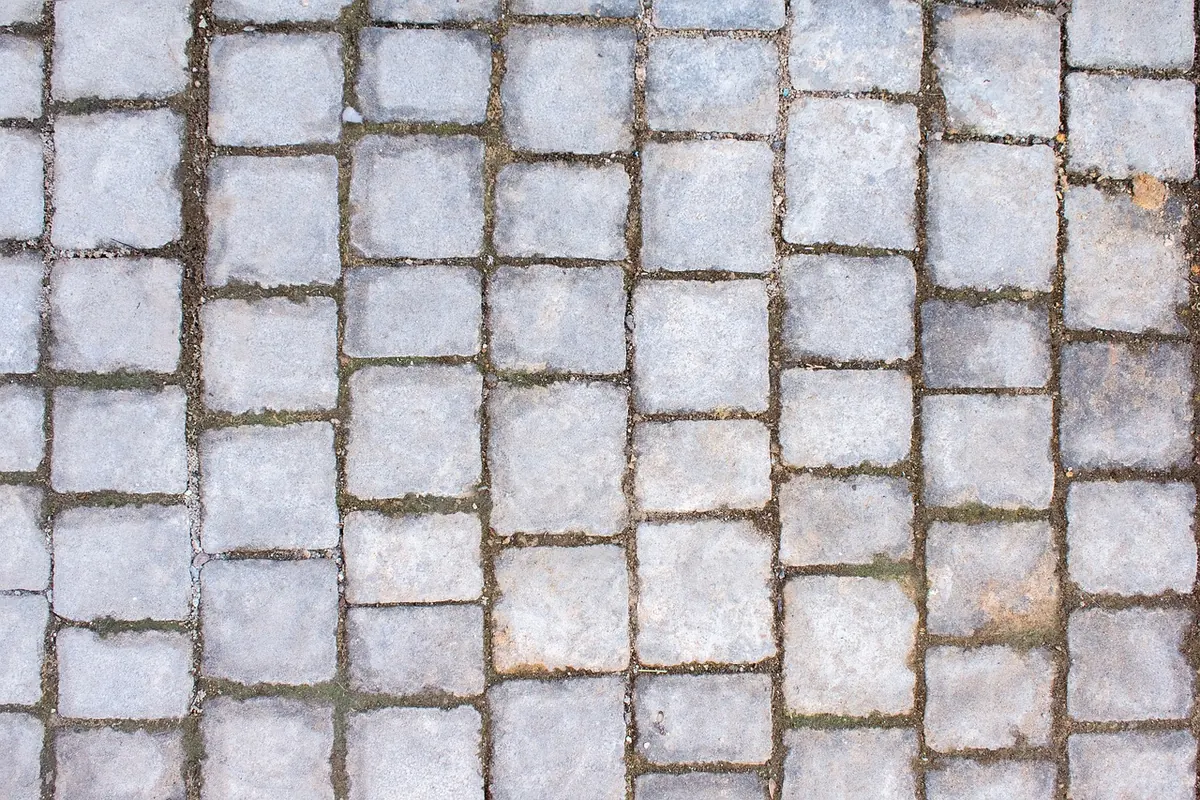
A sett is a squared stone. It has been dressed — cut or split — so the top is flat and the sides roughly rectangular. Granite is the classic material, though you will also find whinstone, limestone and, in newer work, concrete copies. Sizes vary: a common granite sett for a carriageway is around 100mm square on top and 100mm deep, but larger ones run to about 300mm by 200mm.
Almost every famous British "cobbled" street is, strictly speaking, setted. The confusion is old and probably permanent, so the practical point is this: if you want squared stone, ask for setts, and say whether you want them sawn (machine-cut faces, neat and even) or cropped (hand-split, slightly irregular, more traditional in feel). Ask simply for cobbles and you may genuinely be offered rounded pebbles, which is rarely what anyone wants on a footway.
Two related words are worth knowing. Pitching means setting stones on edge, pointed end up, usually to give grip on a slope. A boulder is a large cobble, and has no precise size attached to it.
Flags, slabs and paving stones
A flag is flat and wide, and usually rectangular. Traditional flags were split from sandstone or limestone — Yorkstone is the famous one, and the name gets used loosely for anything similar in colour. Modern equivalents come in concrete, cast stone and imported granite.
Flags are the classic footway material, and their defining quality is thinness relative to width. A footway flag is often 50mm to 75mm thick; heavier ones go where vehicles will cross. Setts are small and chunky, flags are large and thin, and that difference drives everything about how each is laid.
Slab is more or less interchangeable with flag, though it tends to suggest something smoother and more regular. Paving stone is the vaguest of the three and can mean anything from a 900mm flag to a 200mm block, so avoid it in a written specification.
Kerbs, channels, gullies and edging
The kerb is the edge between carriageway and footway. In British English the noun is kerb; curb is the American spelling, and the verb meaning to restrain. Kerb profiles appear on drawings by name, so learn them:
- Half-battered — the face slopes back slightly. The standard street kerb.
- Bullnose — rounded top, used where people step on and off and in pedestrian areas.
- Splayed or 45-degree — the face slopes outward, common at vehicle crossings.
- Radius kerbs — curved units forming the corners at junctions.
- Drop kerbs — the lowered section at a vehicle or pedestrian crossing.
The channel is the strip of paving between the kerb face and the carriageway — the line running along the gutter. On older streets it is granite; on newer ones, concrete channel blocks. A gully is the grated drainage inlet set into it.
Edging is the smaller material holding the edge of a path or planting bed. It is not built to take vehicle loads, and assuming a length of concrete edging will do the job of a kerb is a common and expensive mistake.
Bedding, haunching and pointing
These three words describe how paving is fixed in place.
Bedding is the layer directly beneath the stones — sharp sand, or a sand-and-cement mortar where loads are heavier. Sub-base is the compacted crushed stone underneath that, usually a graded material such as Type 1, and it does most of the structural work.
Haunching is the concrete packed against the back of a kerb to stop it being pushed sideways. When a kerb starts leaning into the road, failed haunching is often the reason.
Pointing is what fills the joints: sand-and-cement mortar, lime mortar on historic work, or a modern resin compound. On setts, joints of roughly 10–15mm are normal. Flags are laid much tighter, often under 5mm.
A short glossary of the rest
- Camber — the gentle fall across a surface so water runs off. Expect something around 1:40 to 1:60 on a footway; too flat and it puddles, too steep and it is awkward to walk on.
- Coursed — laid in straight rows. Also called running or stretcher bond.
- Radial or fan — setts laid in curves, often at corners or around a feature.
- Random — no fixed pattern, with sizes and course heights varied deliberately.
- Hoggin — a compacted gravel-and-clay mix for informal paths, not a footway paving material.
- Brindle — a colour description, a mix of browns and reds, not a material.
Using the right words in practice
When you report a problem or ask for a quote, describe what you can actually see and measure. "About six square metres of granite setts, roughly 100mm, laid in rows, jointing gone and three stones rocking" tells a contractor far more than "the cobbles are broken".
A few habits that save trouble:
- Measure one stone and photograph it next to a tape or a coin. Size and shape settle most arguments early.
- Say whether the surface is on an adopted highway or private land. If it is adopted, the local highway authority has the final say on materials.
- If the street sits in a conservation area, or the surface is locally listed, speak to the conservation officer before lifting anything. Reinstating with the wrong stone is costly to undo.
- Ask for a written specification covering bedding, joint width, pointing mix and finish.
- Request a sample or a small trial area before committing to the whole job.
For anything beyond a small repair — or wherever drainage, vehicle loading or a protected street is involved — take advice from a qualified paving contractor or a conservation officer rather than relying on a description alone. The vocabulary is only the beginning, but it is the part that puts the right stone on the right pallet.
Photo: inmorino / Pixabay