Walk up Steep Hill in Lincoln and you feel it before you see it: a slight roll underfoot, the click of shoes on stone, and rainwater hurrying along a channel cut between the crown of the street and the kerb. Most people call that surface cobbled. Strictly speaking, much of it is not. Britain's stone streets are a mix of materials and methods laid over roughly two thousand years, by engineers, merchants and councils who each had a different idea of what a street was for.
What the Romans Actually Laid
Roman engineers were unsentimental about stone. Paving was expensive, so they used it where it paid: in towns, at junctions, on steep gradients, and at the approaches to gates and bridges. Long-distance routes such as Watling Street and Ermine Street were often finished with compacted gravel, which was quick to lay and easy to repair.
Where they did pave, they built up in layers and finished with large, flat, roughly squared stones bedded on sand or mortar, cambered so water ran into stone-lined gutters at the edges. Surviving stretches at sites such as Silchester and Caerwent show how tidy it was. These are paving slabs rather than cobbles, and the distinction matters. The rounded stones most people picture came centuries later, when medieval builders stripped Roman ruins for ready-dressed material and reused it in walls, church foundations and street surfaces.
The Medieval Market and the Cost of Paving
For most of the Middle Ages, a British street was mud. Cart ruts, animal dung, timber planks over the worst patches, and a raised causeway where pedestrians could keep their feet dry. Paving was a luxury, and it usually appeared in patches rather than whole streets: the market square, the churchyard edge, the route through a town gate.
Money was the obstacle, and the solution was often a levy. From the thirteenth century onwards, the Crown granted towns the right to collect pavage, a toll on goods brought in to be sold, with the proceeds spent on paving. Guilds and wealthy merchants paid for stretches themselves, and a prosperous trader might pave the ground in front of his own shop as a mark of standing. That is why so many towns have a street or square simply called Pavement, including the one in York that took its name from the paved market area.
The market place was the heart of it. Here were the butter cross, the corn market, the flesh shambles where butchers traded, and the space where cloth, cheese and livestock changed hands on set days. The paving had to take hooves, cartwheels and constant scrubbing, and it was laid accordingly: heavy, close-jointed and slightly dished so that waste could be swept and sluiced away.
Cobbles, Setts and Words Worth Knowing
Much confusion in Britain comes from using one word for several things. The trade distinctions are simple enough:
- Cobble — a rounded stone worn smooth by water, gathered from riverbeds or beaches. Laid rounded side up, it is uncomfortable underfoot and slippery when wet, but the gaps between stones drain well.
- Sett — a quarried stone cut roughly square or rectangular, usually 100mm or so across. Tighter, flatter and far better for wheeled traffic.
- Camber — the deliberate crown down the middle of a street, shedding water to both sides.
- Channel or gutter — the line of setts or flags between the camber and the kerb, where the water actually runs.
- Kerb — the raised edge holding the footway, often granite and often the last original stone left in a street.
- Flag — a large flat slab, traditionally used for footways and doorsteps.
Reading the laying pattern
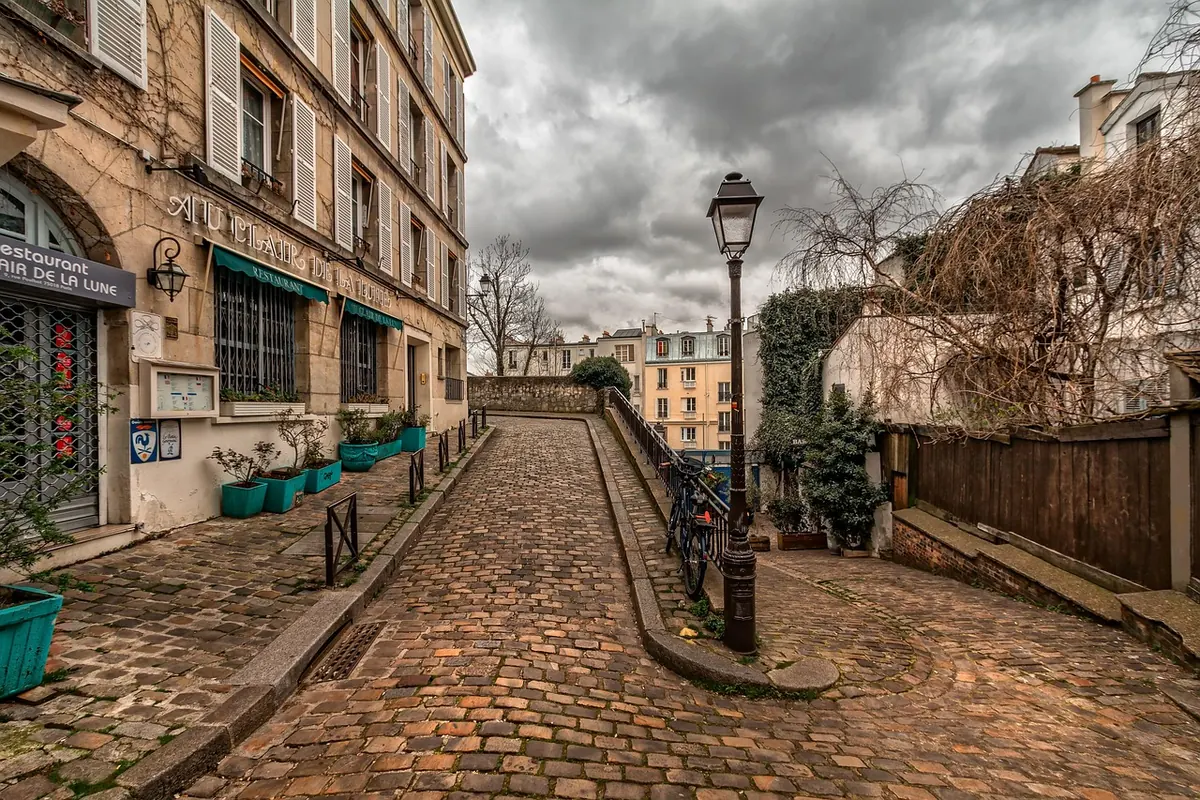
Look at how the setts are arranged. Long straight rows running across the street suggest a steady hand and a flat site. Curving arcs and fan shapes turn up on hills and bends, and although they are often said to give horses better footing, they also shed water and spread the load of a wheel across more stones. Patched areas of a different colour or size usually mark where a gas, water or sewer trench was opened and closed.
Georgian Improvements and Victorian Terraces
Turnpike trusts from the 1660s onwards rebuilt the main routes between towns, and the coaching trade that followed pushed urban authorities to do the same indoors. Improvement commissions in the eighteenth century straightened streets, laid proper drainage and surfaced them with setts and flag footways, lit by oil and then gas lamps.
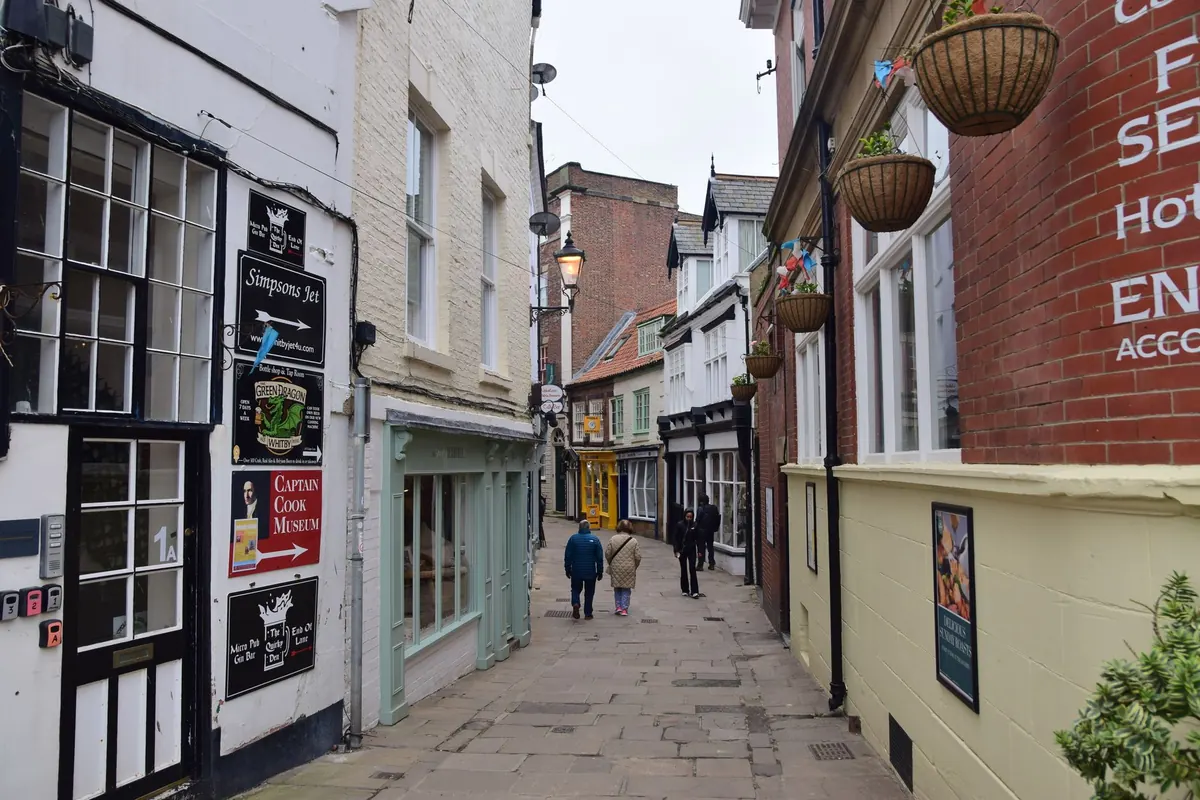
The Victorians industrialised the job. Granite setts arrived by the shipload and the trainload from Aberdeen, Cornwall and the quarries at Mountsorrel in Leicestershire, while local gritstone and limestone filled in elsewhere. Streets of terraced housing were laid out with a cambered sett carriageway, granite kerbs and flagstone pavements, and the soundscape was iron-shod wheels, clogs and horses. Walk through the back streets of Skipton, Whitby or a hundred smaller towns and you are walking on that same specification.
Why Some Streets Survived, and Why Many Did Not
Tar-bound macadam, and later asphalt, was quieter, cheaper and easier to sweep. From the early twentieth century it spread street by street, and in the post-war decades utility trenches and heavier vehicles finished the job in many places. Often the setts were not removed at all, simply buried under a layer of blacktop. Where they were lifted, they were frequently sold on, and theft of loose setts from roadworks remains a nuisance.
What saved the rest was a change in taste backed by law. The Civic Amenities Act 1967 created conservation areas, and alongside listed buildings it gave councils a reason to keep original surfaces rather than replace them. The backlash arrived too: some modern schemes lay imported stone or concrete blocks in imitation of old setts, and a sharp eye can usually tell the difference by the uniform colour, the mechanical regularity and the absence of wear.
Walking Them, and Looking After Them
If you want to see the real thing, go early on a wet morning when the stone darkens and the wear patterns show. Look at the kerb line, the gutter setts, the places where stone changes size, and the polish on the crown of a steep hill, worn shiny by two centuries of feet.
Practical notes for anyone living with a stone street:
- Wear shoes with a bit of tread. Smooth soles and wet granite are a poor combination, and a sideways step down a cambered slope is safer than a straight one.
- Before lifting, replacing or re-laying any setts, find out who owns the surface. Most streets are highway, and many sit in a conservation area.
- Ask the local authority's conservation officer for advice first, and check whether the stone is protected or whether matching reclaimed material is expected. Planning and highway rules vary, so take proper guidance before you start work.
- If you are simply repairing a private yard or path, keep the old setts. They are hard to match and their wear is what makes them look right.
These streets are not a stage set. They are working surfaces that have been patched, lifted and relaid for centuries, and that is exactly why they still feel like places rather than routes.
Photo: Surprising_Media / Pixabay